From Thunderstorms to Taylor Swift: Building the Ultimate Calming Playlist for Your Anxious Dog
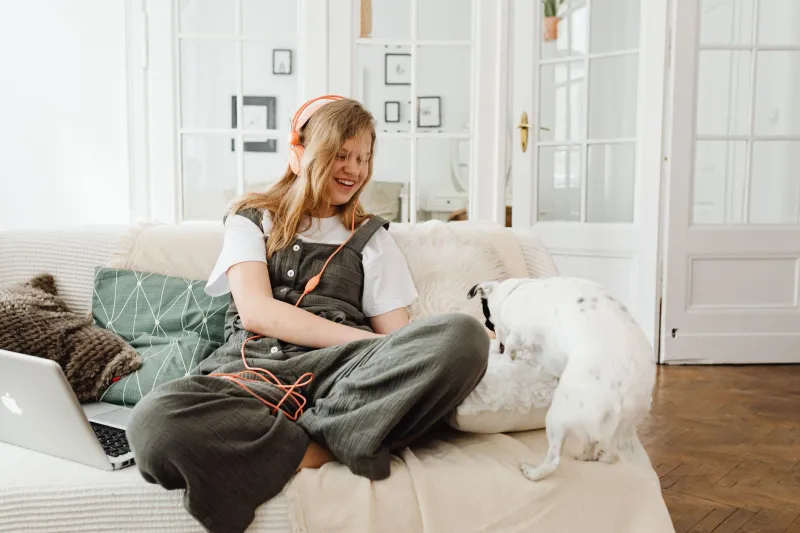
It was a Tuesday night in suburban Ohio when Michelle Parrish discovered that her rescue beagle, Biscuit, had a deep and abiding love for Bob Marley. Not because she planned it. Not because she read some dog parenting blog. But because she accidentally left a reggae playlist running while she ran to grab groceries, and came home to find Biscuit curled up on the couch instead of shredding the throw pillows like he usually did.
"I thought he was sick," she laughs. "Turns out he was just... vibing."
Michelle isn't alone. Across the country, anxious dogs are finding their chill — and their families are finding their sanity — through something deceptively simple: music. And the science behind it is more interesting than you might expect.
Why Dogs Actually Respond to Music (No, Really)
Dogs aren't just politely tolerating your Spotify habits. Research from the Scottish SPCA and the University of Glasgow found that dogs exposed to music showed measurable behavioral changes — less barking, lower heart rates, and more lying-down time. The kicker? Genre matters enormously.
Soft rock and reggae produced the most consistently calming effects across the dog population studied. Classical music helped too, but dogs seemed to habituate to it faster — meaning after a while, Beethoven stopped doing the job. Variety, it turns out, is just as important for your dog's playlist as it is for yours.
Dr. Susan Wagner, a veterinary neurologist who has studied the effects of sound on animal behavior, has noted that tempo is one of the biggest variables. Music hovering around 50 to 60 beats per minute — roughly the resting heart rate of a calm dog — tends to be the most effective. Think slow, steady, and not remotely aggressive. Sorry, heavy metal fans. Your dog is judging you.
The Anxiety Triggers You're Probably Underestimating
Before you build the playlist, it helps to understand what you're actually fighting. Dog anxiety isn't one-size-fits-all. The big three culprits in most American households are:
Thunderstorms and fireworks. Fourth of July is, without exaggeration, the worst holiday of the year for anxious dogs. The combination of unpredictable booming sounds and atmospheric pressure changes sends many dogs into a spiral that no amount of belly rubs can fully fix.
Separation anxiety. Remote work spoiled a lot of dogs during the pandemic, and now that offices are calling people back, plenty of pups are genuinely struggling with alone time. This is where music therapy shines brightest — it creates an auditory sense of "someone is still here."
Vet trips and car rides. Some dogs associate motion and unfamiliar environments with dread. A calming playlist started before the car even moves can help reset their baseline.
Knowing your dog's specific triggers lets you build targeted playlists rather than just throwing on whatever you happen to be streaming.
Building Your Dog's First Playlist: A Practical Breakdown
You don't need a music degree or a fancy speaker system. You need a streaming account and about twenty minutes. Here's a structure that actually works:
Start slow, stay slow. Open with the lowest-energy tracks you can find. Think acoustic guitar instrumentals, soft piano, or ambient nature sounds layered under gentle melodies. Avoid anything with sudden volume spikes — that means no dramatic orchestral swells, no matter how beautiful.
Lean into reggae and soft rock. Artists like Jack Johnson, Ben Harper, and yes, actual Bob Marley have shown up repeatedly in anecdotal pet parent reports as canine crowd-pleasers. There's something about that steady, unhurried rhythm that seems to speak directly to a dog's nervous system.
Try species-specific music. Companies like Through a Dog's Ear have developed music specifically engineered for canine auditory systems, accounting for the fact that dogs hear a much wider frequency range than humans. These albums are clinically tested and genuinely different from just hitting shuffle on your chill playlist.
Loop it. Silence between tracks can be enough to jolt an anxious dog back to alert mode. Set your playlist to loop so there's no jarring gap.
Volume matters. Louder is not better. Aim for background level — something you'd use for a dinner party conversation, not a living room concert.
Making Music Therapy Part of Your Daily Routine
Here's where families often stumble: they only turn on the calming playlist when things are already bad. The dog is already pacing, already panting, already convinced the world is ending — and then you hit play and expect miracles.
Music therapy works best as prevention, not rescue.
Try integrating it into your daily routine the same way you'd approach a toddler's bedtime wind-down. Start the playlist about 20 minutes before a known stressor — before you leave for work, before the predicted storm window, before the fireworks start on the Fourth. You're essentially training your dog to associate those specific sounds with safety and calm, which takes repetition.
The Nguyen family in Austin does this almost unconsciously now. "We have a 'leaving playlist' and a 'storm playlist,'" says dad Kevin. "The dogs hear the leaving one and just go lie down. It took about three weeks to get there, but now it's automatic."
For families with kids, turning on the calming playlist can also serve as a signal to the whole household to bring the energy down — which, honestly, benefits everyone.
When Music Isn't Enough
Let's be real: music is a tool, not a cure. If your dog's anxiety is severe — think destructive behavior, self-harm, complete inability to function during triggers — you need a conversation with your vet before you need a playlist. Music therapy works beautifully alongside behavioral training and, when appropriate, medication. It doesn't replace them.
But for the vast majority of moderately anxious dogs? A thoughtfully built playlist is one of the cheapest, most accessible, and most consistently effective tools in the pet parent toolkit. And unlike puzzle feeders or anxiety wraps, it also happens to make your house sound really pleasant.
Biscuit, for his part, has graduated to a sophisticated playlist that includes Jack Johnson, some light bossa nova, and — in a development Michelle did not see coming — a significant amount of soft country. "He's a beagle from Ohio," she shrugs. "It tracks."
Put on something good tonight. Your dog will thank you in the only way they know how: by finally, blissfully, sitting still.