Fur Meetings and Deadline Snuggles: How Your Pet Is Quietly Rewiring Your Family's Work-From-Home Life

Photo: Office of Greg Stanton, United States Congress, Public domain, via Wikimedia Commons
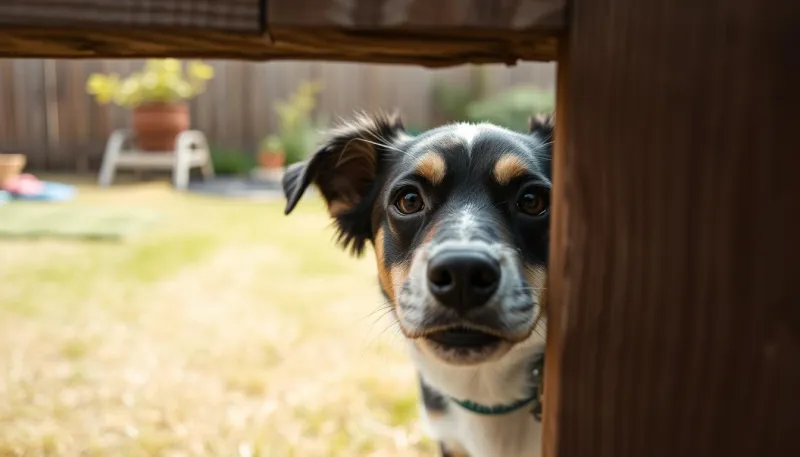
It is 9:47 AM on a Tuesday. You have three deadlines, a school pickup in four hours, and a dog who has decided that right now — this exact moment — is the ideal time to drop a tennis ball on your keyboard and stare at you with the moral authority of a disappointed grandfather.
Welcome to the modern American work-from-home family, where "office interruptions" have fur and bad timing, and the line between "work break" and "dog walk" is genuinely philosophical.
Here's the thing, though: a growing body of research suggests that the chaos your pet introduces into your workday might not be the productivity killer you've been treating it as. In fact, it might be doing something rather useful. Let's unpack that — carefully, because the dog is watching.
The Science of the Pet Break (Yes, This Is Real)
Researchers at Virginia Commonwealth University found that employees who brought their dogs to work reported significantly lower stress levels throughout the day compared to those who didn't — and those stress levels held even on high-pressure days. Separate studies have shown that brief interactions with animals can lower cortisol, reduce blood pressure, and trigger a small but meaningful release of oxytocin, the bonding hormone that also happens to make humans feel calmer and more focused.
In plain language: petting your dog for five minutes between tasks is not slacking. It is, according to science, a legitimate cognitive reset.
For families working from home — which, post-pandemic, describes a substantial chunk of the American workforce — this has interesting implications. The pet who seems to be interrupting your flow might actually be inserting micro-breaks that your brain genuinely needs. Human attention is not designed for marathon, uninterrupted focus sessions. It's designed for rhythmic bursts of concentration punctuated by recovery. Your cat demanding attention at 11 AM is, in a deeply annoying way, biologically appropriate.
The Guilt Nobody Talks About
Of course, the research-backed benefits don't do much to quiet the guilt. And if you work from home with pets, you know exactly which guilt I mean.
It's the guilt of watching your dog sigh heavily at the door while you're on a call you can't exit. It's the guilt of realizing it's 3 PM and you haven't interacted with your cat since a cursory good-morning chin scratch. It's the specific, grinding guilt of being physically present in the same house as your pet for eight hours and somehow still feeling like you've neglected them.
This guilt is particularly acute for families, because the pet care responsibilities don't disappear just because the adults are working — they just redistribute. Kids get recruited as mid-afternoon dog walkers. Pets learn that 12:30 PM means dad is on lunch and therefore available for fetch. The household develops its own unwritten pet-care schedule, usually through trial, error, and at least one incident involving an unsupervised cat and a houseplant.
The important thing to recognize is that guilt-driven pet care — rushing a walk because you feel bad, squeezing in frantic play sessions to compensate for hours of neglect — isn't actually serving your pet. Consistency and quality beat guilt-fueled overcompensation every time.
When the Pet Becomes the Team Member Nobody Hired
There's a running joke in work-from-home culture about pets crashing video calls, and at this point it's less a joke than a universal experience. Dogs have appeared in congressional hearings. Cats have walked across keyboards during investor presentations. A golden retriever once spent an entire company all-hands visible in the background, methodically chewing a shoe with the calm focus of someone who has truly found their purpose.
But beyond the comedy, something genuinely interesting is happening. Pets in the background of video calls have been shown to make their owners appear more approachable and trustworthy to colleagues and clients. In a remote work culture where human connection is increasingly mediated through a screen, a dog wandering into frame can do more for your likability than three slides of polished brand messaging.
Families have also found that pets serve as unexpected social anchors for kids doing remote school. A cat who settles on a child's desk during a virtual class provides a tactile comfort object that reduces fidgeting and anxiety. Multiple parents have reported that their kids' focus improved when the family pet was allowed to be nearby during online learning — a finding that would have seemed absurd in a traditional classroom context but makes a lot of sense in the weird liminal space of the home-as-school.
Making It Actually Work: Integrating Pets Into Your Family's Daily Rhythm
Here's where we get practical, because good intentions without structure just produce more guilt and more sighing dogs.
Scheduled walks beat spontaneous ones. Build the dog walk into your calendar the way you'd schedule a meeting. A 7:30 AM walk, a 12:30 PM walk, and a 5:30 PM walk create predictability for your pet and built-in transition points for your workday. Your pet learns the schedule. Your brain gets the breaks.
Designate pet-friendly work zones. If your pet is going to be in your workspace anyway — and they will — make it intentional. A dog bed under your desk, a cat perch near your monitor. Designated spots reduce the "I need to be on your lap RIGHT NOW" behavior because your pet feels included rather than shut out.
Distribute the care load across the family. Work-from-home parents who treat pet care as a solo responsibility burn out. Assign age-appropriate tasks to kids: filling water bowls, afternoon walks, feeding schedules. This is good for your sanity, good for the pet, and — bonus — genuinely good for your kids' development of responsibility and empathy.
Protect the focused hours. If you have a two-hour block that requires deep concentration, create a physical boundary. A closed door, a baby gate, a pet settled with a long-lasting chew. You're not abandoning your pet. You're creating structure that allows you to be more present with them outside those windows.
The Honest Bottom Line
Pets don't ruin productivity. Unmanaged pet care expectations do. The family that treats pet integration as a design problem — something to be thoughtfully structured rather than reactively managed — usually finds that the animals in their home become assets to the workday rather than obstacles to it.
The dog sighing at your door is not your enemy. He's your most consistent advocate for the work-life balance your therapist has been suggesting for three years. Maybe listen to him.