Squeak No More: How to Tame the Pet Toy Avalanche Before It Swallows Your Living Room Whole
It started innocently enough. A tennis ball here. A catnip mouse there. Maybe a rope toy shaped like a pretzel because it was on sale and honestly, who could resist? Fast-forward eighteen months and your living room looks like a Petco warehouse after a tornado. There are squeakers behind the couch cushions. A rubber hedgehog is living under the radiator. Your kid is using a dog frisbee as a plate, and nobody is even blinking anymore.
Welcome to peak pet parent chaos. Population: your entire household.
The good news? You are not alone, you are not failing, and this situation is one hundred percent fixable. The slightly less good news? It requires a toy purge — and that means navigating the feelings of two very invested parties: your pets and your children. Neither of whom will make this easy.
Why the Pile Keeps Growing (Spoiler: It's Not Just You)
Before you start stuffing things into trash bags, it helps to understand why the toy collection spiraled so dramatically in the first place. And here's the thing — it's not entirely irrational.
Pets, especially dogs, actually benefit from having a rotating variety of toys. Novelty keeps them mentally stimulated. A toy that's been sitting in the basket for three weeks suddenly becomes the most thrilling object on earth the moment it reappears after a little time away. This is called the "novel object effect," and it's basically your dog's brain working exactly as designed.
Kids operate on a similar frequency. They see a toy at the pet store, they feel a surge of love for your animal that borders on religious devotion, and suddenly that $14.99 interactive feather wand is a need. A moral imperative. A matter of household harmony.
And you, exhausted parent that you are, occasionally say yes just to get out of the store in under forty-five minutes.
None of this is shameful. It's just life. But at some point, the pile becomes the problem — and that's when it's time to edit.
The Toy Audit: What Actually Deserves a Spot in Your Home
Pull everything out. Yes, everything. Get it all in one place, ideally somewhere with good lighting and zero pets or children present, because you will need to make cold, rational decisions and that is impossible with a Labrador staring at you like you're dismantling his retirement fund.
Now sort into three piles:
Keep: Toys your pet actively plays with at least once a week. Toys that serve a real purpose — puzzle feeders, chew toys that support dental health, fetch toys that double as exercise tools. Anything that genuinely contributes to your pet's physical or mental wellbeing.
Rotate: Toys that your pet likes but doesn't need access to every single day. These are your secret weapon. Stash them in a bin in the closet and swap them out every two to three weeks. Your pet will act like it's Christmas morning. Every time. It never gets old.
Retire: Broken toys. Toys missing parts that could be swallowed. Toys so thoroughly destroyed that they're now just a vague memory of their former shape. Also: duplicates. You do not need four rope toys. Nobody needs four rope toys.
If a toy is still in decent condition but your pet has clearly lost interest, consider donating it to a local animal shelter. Most shelters gratefully accept gently used toys, and you get to feel genuinely good about yourself while also clearing counter space. Win-win.
Storage Solutions That Don't Make Your Home Look Like a Pet Store Stockroom
Once you've edited the collection down to a manageable size, the next mission is containment. The goal is a system that's easy enough for kids to use, accessible enough for pet feeding time, and attractive enough that you don't feel the urge to apologize to every guest who walks through your front door.
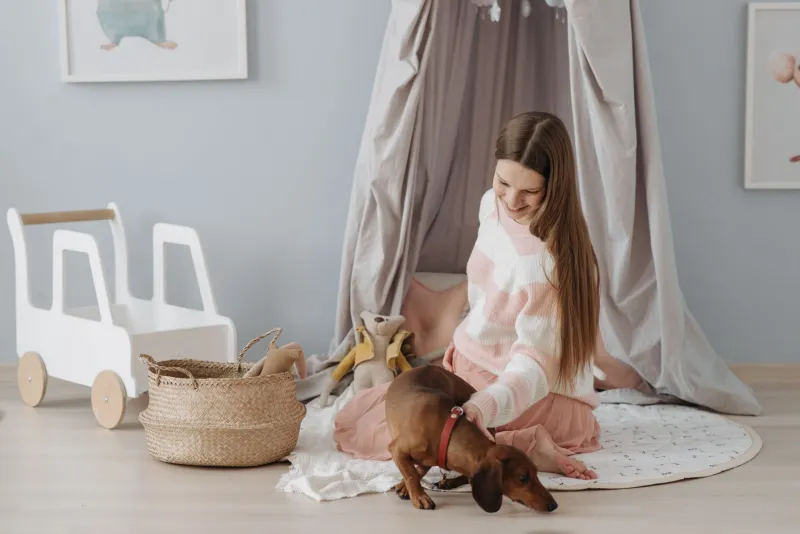
The Wicker Basket Approach: A large, lidded wicker basket or fabric bin near your pet's main hangout area keeps toys corralled without looking chaotic. Bonus: it blends into actual human decor. Teach your kids that toys go back in the basket when playtime is done. This will take approximately four hundred repetitions to stick, but it will eventually stick.
The Closet Rotation Bin: Designate a bin or shelf in a closet specifically for the rotation stash. Label it if you need to. Swap toys in and out every few weeks and watch your pet's enthusiasm levels stay surprisingly high without adding a single new purchase.
The Door Organizer Hack: Those over-the-door shoe organizers? Incredible for cat toys, small dog toys, and accessories. Each pocket holds a few items, everything stays visible, and nothing ends up under the furniture again. Probably.
The Toy Box with Boundaries: If you have kids who love the idea of their pet having their own toy box, lean into it. Let them decorate it, label it with the pet's name, and take ownership of keeping it tidy. Giving kids a role in the organization process dramatically increases their investment in maintaining it. At least for a few weeks.
The Purchasing Freeze (And How to Enforce It)
Here's the hard part. Once you've done the work of auditing and organizing, you have to actually slow the incoming flow. That means having a brief, loving conversation with your family about the fact that the toy situation has reached its constitutional limit.
Set a simple rule: one toy in, one toy out. Before anything new enters the house, something old has to leave it. This isn't deprivation — it's curation. You're building a thoughtful, functional collection instead of an archaeological dig site.
For gift-giving occasions — birthdays, holidays, random Tuesday impulse buys — redirect well-meaning relatives toward consumables like treats, dental chews, or puzzle refills. These bring joy, get used up, and do not live permanently on your floor.
The Bigger Picture: A Calmer Home for Everyone
Here's what nobody tells you about pet toy clutter: it doesn't just bother you. It actually affects your pets too. An overwhelming pile of toys can reduce novelty, lower engagement, and leave animals less stimulated than a thoughtfully rotated, smaller collection would. Less really can be more — even for a golden retriever who would argue otherwise.
And for your kids? Learning that caring for a pet means being intentional — choosing quality over quantity, keeping things organized, thinking about what an animal actually needs versus what looks cute on the shelf — that's a life lesson wearing a very fun disguise.
So take a breath. Grab a trash bag and a donation box. Reclaim your living room one rubber squeaker at a time. Your floors, your sanity, and honestly your pets will thank you for it.
Just maybe wait until the dog is napping to start. Some battles are better fought quietly.