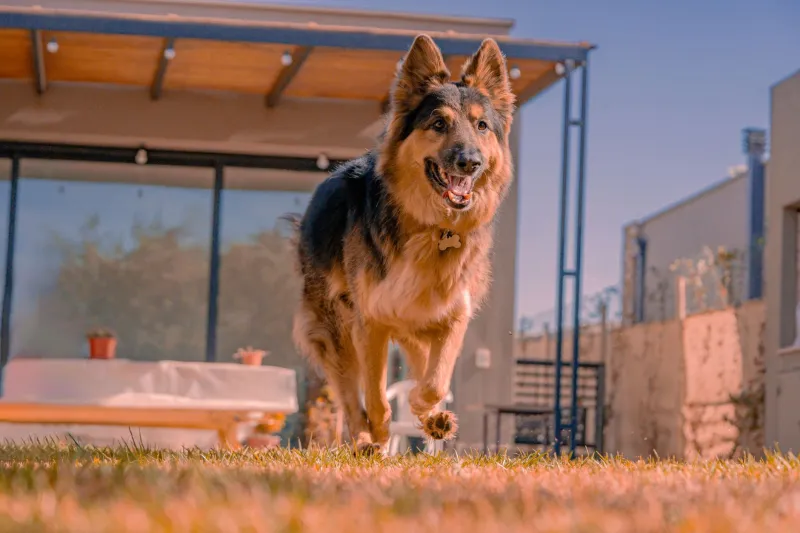
Mission Impawsible: Cracking the Code on Why Your Pet Keeps Vanishing (and How to Finally Outsmart Them)
It starts innocently enough. You open the front door to grab the mail, and suddenly there's a brown blur rocketing down the sidewalk at speeds that would embarrass a greyhound. Or maybe you wake up to find the cat — the one you definitely secured inside last night — sitting smugly on the porch, judging you through the glass. If your household has its very own furry Houdini, welcome to the club. It's a large club. There are snacks.
But here's the thing: pet escapes aren't random acts of chaos. They're actually pretty well-understood behaviors rooted in instinct, curiosity, and sometimes, a cry for help dressed up in very cute packaging. Understanding why your pet is sprinting for freedom is the first step toward actually keeping them home — and possibly preserving what's left of your sanity.
The Psychology of the Great Escape
Animal behaviorists are pretty consistent on this point: most pets don't bolt because they hate you. (We know. Emotionally complicated.) Dogs, especially, are driven by a cocktail of instincts — prey drive, territorial curiosity, and the intoxicating pull of a smell that apparently smells incredible from two blocks away. For intact males in particular, the motivation can be hormonal, and the urgency they feel is genuinely overwhelming. It's less "I want to explore" and more "I have received a biological telegram and I must respond immediately."
Cats operate on a slightly different frequency. They're wired for territory expansion, and what looks like a leisurely stroll to you is actually a methodical patrol of their perceived domain. Indoor cats who haven't been spayed or neutered are especially motivated to roam. But even fixed cats can develop a taste for the outside world once they've had even a single unsupervised adventure. Freedom, it turns out, is a very sticky habit.
Then there's the anxiety angle, which often gets overlooked. Dogs with separation anxiety or under-stimulation can become genuinely desperate to get out — not because outside is better, but because staying inside with all that nervous energy feels unbearable. Escape becomes a coping mechanism. Not ideal, but understandable.
The Door Dasher: Your Dog's Favorite Trick
The classic scenario: someone rings the doorbell, you open the door, and your dog treats the open doorway like the starting gun at the Indy 500. Door dashing is one of the most common — and dangerous — escape behaviors, and it happens so fast that most families feel completely powerless against it.
The fix isn't just "train your dog better" (though, yes, that too). It's about restructuring the environment before the moment of temptation arrives. Baby gates positioned a few feet back from the front door create a buffer zone that buys you precious seconds. Teaching a solid "place" command — where your dog goes to a designated mat and stays there when the door opens — is genuinely one of the most useful skills you can build, and it only takes a few weeks of consistent practice.
For families with young kids who can't always be trusted to manage the door protocol (no shade — kids are chaotic), consider a double-door vestibule setup if your entryway allows it. One door closes before the next opens. It sounds extreme until you've spent forty minutes chasing your Lab through the neighborhood in your pajamas.
The Fence Phantom: Diggers, Climbers, and Creative Thinkers
Some dogs treat the backyard fence like a puzzle to be solved. And honestly? They're not wrong to try. Diggers are often working dogs or terrier breeds whose entire genetic purpose was to go underground after things. Climbers tend to be athletic, high-energy dogs who've figured out that the top of the fence is just a destination with extra steps.
For diggers, the most effective solution is an L-shaped footer — basically, chicken wire or hardware cloth buried about a foot down and bent outward along the base of the fence. It's not glamorous, but it works. For climbers, coyote rollers (spinning cylinders mounted along the top of the fence) prevent dogs from getting the grip they need to haul themselves over. They look a little industrial, but your dog's safety is worth the aesthetic sacrifice.
Height matters too. Many families underestimate how high their dog can actually jump when sufficiently motivated. If you've got a jumper and a six-foot fence, it might be time for a fence extension or an inward-angled overhang.
The Cat Conundrum: The Creature Who Defies Logic
If you've ever watched a cat slip through what appeared to be a closed window, you already know: cats are essentially liquid. They can compress themselves through gaps that seem physically impossible, and they are extremely motivated to try.
Window screens are the number one weak point in any cat containment strategy. Standard screens are not designed to hold a determined 12-pound cat who has decided that the bird outside is personally offensive. Reinforced pet screens — available at most hardware stores — are a significant upgrade. For balconies and patios, "catio" enclosures have gone from niche to mainstream, and for good reason. They give cats outdoor stimulation without the risk, and they come in everything from DIY chicken wire builds to full architectural statements.
For the cat who has mastered the art of slipping out when humans enter or exit, the same buffer-zone logic applies as with dogs. A second door, a closed hallway, or even a consistent "check your ankles" habit before opening any exterior door can make a real difference.
Making Home the Better Option
Here's the part that often gets skipped: sometimes pets escape not because outside is irresistible, but because inside isn't interesting enough. A bored, under-exercised dog or a cat with zero environmental enrichment is going to look for stimulation wherever they can find it — and if a gap in the fence is the most exciting thing available, that gap is going to get used.
More exercise, more mental stimulation, more interactive play — these aren't just feel-good suggestions. They're genuinely effective escape-prevention strategies. A dog who gets a solid 45-minute walk in the morning is a much less motivated fence-tester than one who's been cooped up since yesterday. Puzzle feeders, rotating toys, and window perches for cats can dramatically reduce the "grass is greener" impulse.
The Safety Net: Because Perfect Prevention Doesn't Exist
Even the most escape-proof setup has failure modes, because life is chaotic and pets are creative. A current microchip and updated ID tags are non-negotiable — they're the difference between a scary afternoon and a genuine tragedy. Apps like Finding Rover or services through your local shelter can help reunite lost pets faster than ever.
GPS collars have also come a long way. Brands like Tractive and Fi offer real-time tracking that lets you see exactly where your escape artist is headed before they've even cleared the property line. It's not a substitute for good containment, but as a backup? Absolutely worth it.
Your furry Houdini isn't trying to make your life difficult. They're just being exactly what they are — a creature with instincts, curiosity, and an impressive talent for finding the one gap you forgot to check. A little understanding, a few strategic upgrades, and a whole lot of consistency, and you just might out-clever them.
Just don't let them see you reading this. They will absolutely use the information against you.